Freehold vs Leasehold Land in Kenya: Which Should You Buy?
3 min read

A buyer once told us she’d looked at the same plot twice — once as “freehold, KES 1.8M” and once, from a different seller, as “leasehold, 99 years, KES 1.2M.” Same neighborhood, similar size, a 33% price gap. She asked which was the better deal. The honest answer: it depends entirely on what freehold and leasehold actually mean, which most buyers only half-understand until it costs them.
Freehold Land
Freehold ownership is the strongest form of land tenure in Kenya. It means you own the land indefinitely, with no expiry date, subject only to compulsory acquisition by the government for public purposes (with compensation) and general land laws. Most private plots sold to individual buyers — especially subdivided agricultural or residential land — are freehold.
Leasehold Land
Leasehold land is held for a fixed term — commonly 99 years, though 33-year and 50-year leases exist — usually from the government or a private freeholder. When the lease expires, it must be renewed, and renewal is neither automatic nor free. Leasehold land also typically carries an annual land rent payable to the county or national government, on top of standard land rates.
A Worked Comparison
Take two identical half-acre plots, one freehold at KES 2M and one leasehold with 80 years remaining at KES 1.5M. On paper, the leasehold looks like the better deal. But factor in decades of ongoing land rent, the eventual renewal cost and risk, and the lower resale appeal of a lease with fewer years remaining by the time you sell — and the freehold’s higher upfront price often works out cheaper over a long holding period.
Why This Distinction Matters
- Long-term value. A 99-year lease with 40 years remaining is worth less, and harder to finance, than the same parcel held freehold.
- Renewal costs and risk. Leasehold renewal isn’t guaranteed to be smooth or cheap — it depends on compliance with lease conditions and current land rent status.
- Land rent obligations. Unlike freehold owners, leaseholders must keep land rent current; arrears can complicate a sale or transfer. Land rates, which apply more broadly, are covered in our guide to what you’ll pay after buying.
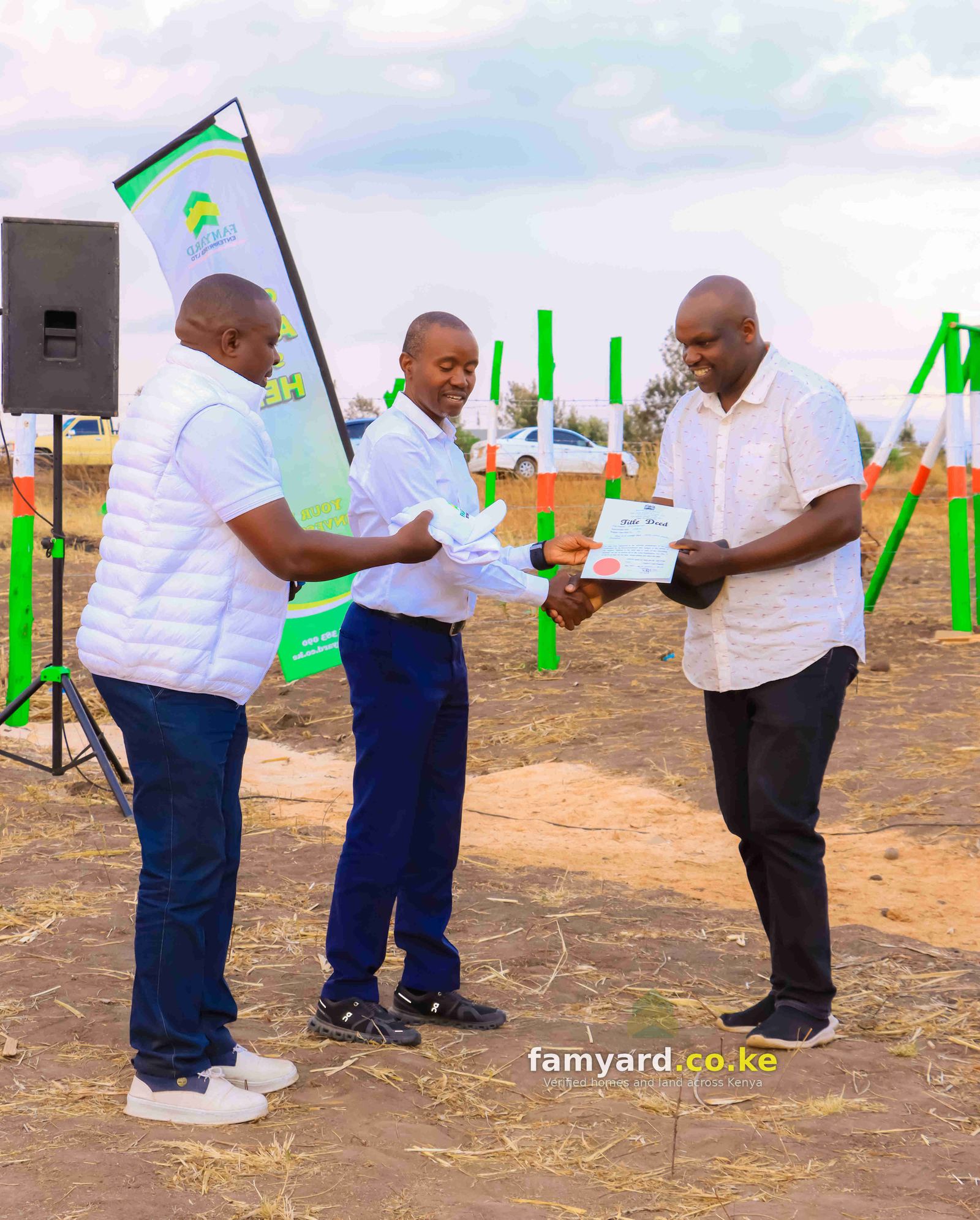
The title deed or lease document will state the tenure explicitly. A search at the relevant Land Registry, or on Ardhisasa for digitized counties, confirms it independently of what a seller tells you — never take tenure on verbal assurance alone.
How to Confirm Which One You’re Buying
See our breakdown of how Ardhisasa works and our step-by-step title deed verification process.
FAQ
Can leasehold land be converted to freehold?
In some cases conversion is possible depending on the land’s history and applicable regulations, but it’s not automatic or guaranteed — confirm the specific parcel’s eligibility with a qualified advocate rather than assuming.
Is leasehold ever the smarter buy?
Yes, for buyers with a shorter time horizon or those who value the lower entry price and don’t plan to hold multiple decades — the calculus shifts with your own timeline.
Famyard’s Approach
Famyard Enterprises deals primarily in freehold plots across Nyeri and Laikipia counties, which is part of why buyers work with us for straightforward, long-term land ownership rather than lease renewal headaches down the line. If you’re unsure what tenure a specific parcel carries, ask before you pay a deposit — a reputable seller will show you the document, not just tell you.